top of page


LessiDance Blog


The Neurobiology of Children’s Hearing
A scientifically unfounded and extremely dangerous stereotype has taken root in modern culture: that music for infants and young children should be deliberately simplified, high-pitched, and synthetic.

Sergey Vereschagin
Jul 1217 min read


The Theory of Environmental Resistance: AI and the Age of Cognitive Weightlessness
Foto: AP Photo/Richard Vogel Frictionless Code and the Uncanny Valley of Meaning Just the other day, the ChatGPT mobile app officially surpassed the 1 billion monthly active users mark. Let that number sink in. Right now, one in eight people on the planet is typing prompts into a text box, entrusting their decisions, texts, code, and thoughts to an algorithm. Hundreds of millions more are using Gemini, Claude, and Meta AI. We have officially awakened to a world where artifici
Sergey Vereschagin
Jun 1518 min read


The Architecture of Silence and Chaos: Mockumentaries as Educational and Production Tools
The End of Sterile Perfection For decades, the children’s media industry has been constructing the illusion of absolute, sterile perfection. In modern, big-budget 3D shows, worlds function flawlessly, physics never fails, and characters never make accidental mistakes not scripted into the overarching plot. A refined, polished reality is projected onto the screen. For the developing psyche of a preschooler, this establishes an extremely dangerous cognitive pattern: the ideal i
Sergey Vereschagin
May 412 min read


The Architecture of Empathy: Minimalist Design and the Economics of Scaling 3D IP
TinyBots Casting A Universal Framework: The Psychology of Silhouettes and Technical Asceticism The End of Visual Chaos: Why Overloaded Design Is a Sign of Weakness Modern 3D animation has fallen into the trap of technological progress. Today’s graphics engines are powerful enough to render every micro-scratch on metal, every fiber on fabric, and dozens of highlights in a single frame. The industry has grown accustomed to taking pride in this hyperrealism, but behind this tech
Sergey Vereschagin
Apr 2712 min read


The Neurobiology of Sound: How We Moved Beyond “Children's Songs” and Created Tactile Music for TinyBots
The End of the “Synthetic Noise” Era Let’s be honest: most modern kids’ playlists make you want to turn them off (or at least turn them down) about three minutes into listening. If we break down a typical song from a popular children’s YouTube channel into its components, we’ll see that it’s not so much music as a full-blown sonic assault. For some reason, the industry has decided that to hold a child’s attention, you need overloaded synthesizers, aggressive bass, an accelera
Sergey Vereschagin
Apr 1910 min read


Montessori and Reggio Emilia in 3D: How We Designed the TinyBots Digital Environment
The Trap of Visual Fast Food Imagine a typical modern playroom. It’s a space crammed to the brim with garish neon plastic, flashing screens, jarring synthetic sounds, and toys that constantly vie for their owner’s attention. An adult with a mature, fully developed nervous system would go mad in such a room within an hour, feeling profound sensory overload and a headache. But the striking paradox is that the industry has somehow convinced us: for young children, all this visua
Sergey Vereschagin
Apr 1310 min read


The Impact of Modern Animation on Children's Nervous Systems and Aesthetics
Is modern animation hurting your child? Today’s "visual fast food" uses aggressive editing and neon colors that trigger sensory overload, leading to post-screen tantrums and loss of focus. Discover the neurobiology behind "screen hysteria" and how the TinyBots™ "Quiet Brand" philosophy - inspired by Japanese minimalism - creates a safe "digital cocoon" to protect developing nervous systems and nurture genuine empathy.
Sergey Vereschagin
Mar 3118 min read


When anyone can create, what is left for creators?
Anyone can create In recent years, we have seen an unprecedented surge in the availability of creative tools. Previously, creating high-quality visual or audio content required years of training, expensive equipment, and professional skills. Today, virtually anyone with a smartphone or computer can use AI services, ready-made templates, and convenient applications such as Canva, CapCut, or Midjourney to create what was once considered the prerogative of experts. On the one ha
Sergey Vereschagin
Oct 23, 202533 min read


Sex, sterility, and emptiness: why the industry fears real attractiveness in games
To make a well-rounded, grounded, and believable character, it takes a lot of skill. Psychology and human behavior are topics someone has to know to make a totally believable and relatable character.

lessisitdikova
Aug 25, 202530 min read
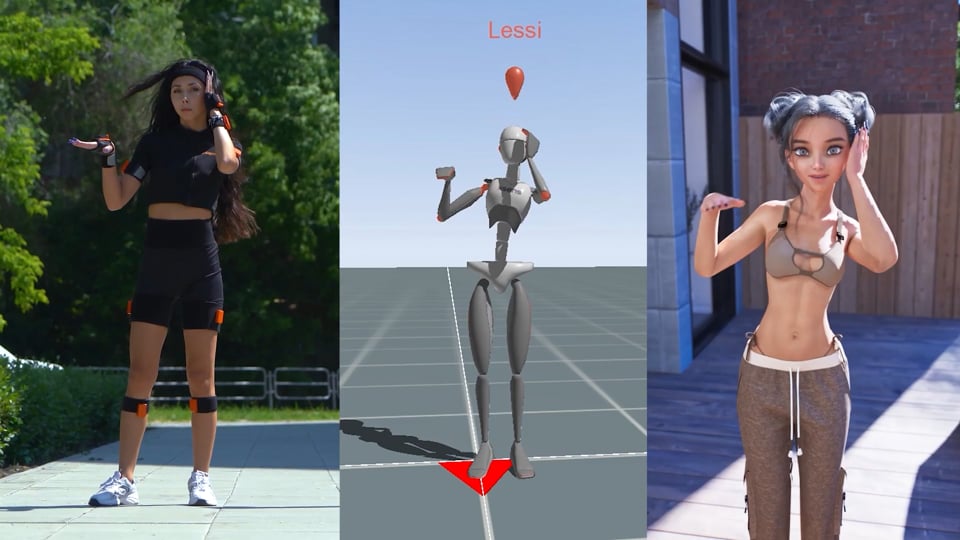
If you can animate dance - you can animate anything
Why talk about dance in animation at all? I recently received a letter from a company asking, “Do you specialize only in dancing figures, or can you do something else?” At first, I was a little confused. Because to me, it sounded as strange as if a professional musician were asked, “Can you only perform complex pieces, or can you do simpler ones too?” For some reason, the animation industry has come to believe that dance is a narrow niche, a kind of secondary specialization.
Sergey Vereschagin
Jul 5, 202512 min read


Move AI Gen 2 vs Xsens: Traditional Mocap killer or just hype? Part 2
Move AI Gen 2 vs Xsens: Traditional Mocap killer or just hype? Part 2
Sergey Vereschagin
Mar 25, 202526 min read


Move AI Gen 2 vs Xsens: Traditional Mocap killer or just hype? Part 1
Move AI Gen 2: technical characteristics and principle of operation Move AI Gen 2 is an updated markerless motion capture system that Move AI introduced in March 2025. It is based on computer vision, AI, and physical models to determine a person's pose from video. The main advantage is the ability to work with regular cameras, such as smartphones, without special suits or sensors. Gen 2 has several new models for motion processing: s2 and s2-light for single-camera recording,
Sergey Vereschagin
Mar 19, 202519 min read


AI in Animation: Why Traditional Methods Are Still Indispensable?
AI-driven animation tools, like Act-One, revolutionize content creation for social media, yet fall short in prof, high-detail workflows.
Sergey Vereschagin
Nov 25, 20247 min read


Markerless motion capture: Innovation or threat to proven technology?
In October 2024, Move AI unveiled its markerless motion capture system Move Live , which enables real-time human motion capture in...
Sergey Vereschagin
Oct 17, 20242 min read


Mass Layoffs and Their Impact on Society and Economy
Introduction Brief overview of the topic Mass layoffs are becoming a growing problem in today's world, especially in the face of rapid technological advancement and global competition. This phenomenon affects various industries including creative industries such as animation. The introduction of new technologies such as artificial intelligence (AI) and automation, along with economic and strategic decisions, is leading to significant changes in the labor market. In this artic
Sergey Vereschagin
Jun 28, 202422 min read


The Future of 3D Animation in the Music Industry
Introduction In the last decade, 3D animation has become an integral part of many industries, and the music industry is no exception. From captivating music videos to full-scale virtual concerts, 3D animation opens new horizons for artists and fans alike. In this blog, we will explore how cutting-edge animation technologies are transforming the ways music content is created, distributed, and experienced. The modern music industry is keen on innovation, not just in sound. Visu
Sergey Vereschagin
May 3, 202410 min read


10 Reasons to Use Dance in Animation for Digital Fashion
Using dance in animation and clothing simulation for digital fashion opens up a range of creative and practical opportunities. Here are several compelling reasons to incorporate dance into these fields: Visual Appeal : Dance brings dynamic movement that can greatly enhance the visual impact of digital fashion. Animated garments can flow, twist, and stretch in beautiful, eye-catching ways that highlight their design and functionality. Realism and Fluidity : Utilizing dance mov
Sergey Vereschagin
Apr 15, 20242 min read


10 Reasons Why Learning Animation and Motion Capture is Valuable in the AI Era
Studying animation and motion capture offers numerous benefits that remain relevant even as AI technology advances rapidly. Here are ten reasons why it's valuable to learn about these fields: Creative Expression : Animation and motion capture are powerful tools for creative expression, allowing artists to bring imaginative worlds and stories to life in ways that other mediums cannot replicate. Understanding Fundamentals : Learning animation helps in understanding the fundamen
Sergey Vereschagin
Apr 14, 20242 min read


The Art of Movement: Exploring Dance in Digital Animation
Introduction Dance, an ancient art form, serves as a powerful expression of emotion, storytelling, and cultural identity. When brought into the realm of digital animation, dance transcends its traditional boundaries, allowing creators to explore new dimensions of creativity and interaction. In this post, we dive into the intricate world of dance within digital animation, examining how this dynamic form of movement enhances narratives and connects with audiences in a profoundl
Sergey Vereschagin
Apr 14, 202417 min read
bottom of page